Half Moon Rising: The Design and Strategy Trend Reshaping How Professionals Create and Connect
Across digital studios, marketing departments, and freelance workshops, a quiet shift is taking hold. It is neither a radical departure from established practice nor a fleeting novelty. Instead, it represents a subtle but powerful recalibration of how professionals approach visual identity, content structure, and audience engagement. This emerging approach, increasingly referred to as Half Moon Rising, is gaining attention for its ability to bridge the gap between minimalism and expressiveness, between clarity and depth.
For those working at the intersection of creativity and commerce—designers, brand strategists, content creators, and entrepreneurs—understanding Half Moon Rising is becoming less a matter of trend-spotting and more a practical necessity. It speaks directly to changing audience expectations, shifting platform dynamics, and a growing desire for work that feels both polished and human. This article explores what Half Moon Rising actually means, why it matters across multiple industries, and how you can apply its principles to your own projects and workflows.
What Half Moon Rising Actually Means
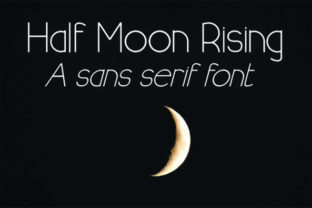
At its core, Half Moon Rising describes a design and communication philosophy that deliberately resists full resolution. It embraces the partially illuminated, the intentionally incomplete, and the suggestive rather than the declarative. Imagine the moment when a crescent moon begins to wax—neither fully dark nor fully bright, but poised in a state of becoming. That liminal quality is the essence of this approach.
In practice, Half Moon Rising manifests as visual compositions that leave room for interpretation, narratives that invite participation rather than passive consumption, and brand identities that evolve rather than arrive fully formed. It is a response to the growing fatigue with hyper-polished, algorithm-optimized content that leaves no space for nuance or discovery. Professionals across fields are finding that this approach fosters deeper engagement, stronger recall, and a more authentic connection with their audiences.
The term itself has begun appearing in design critiques, content strategy discussions, and even product development conversations. It is not a rigid methodology but a sensibility—a recognition that sometimes the most powerful communication happens in the spaces between what is shown and what is implied.
Why Half Moon Rising Is Resonating Now
The timing of this trend is no accident. Several converging forces in technology, consumer behavior, and creative practice have created fertile ground for Half Moon Rising to take hold.
Audience Fatigue with Over-Polished Content
Users today are sophisticated consumers of media. They have seen thousands of perfectly curated Instagram grids, meticulously edited videos, and flawlessly written headlines. The result is a growing skepticism toward anything that feels too manufactured. Half Moon Rising offers an antidote. By intentionally leaving rough edges, open questions, or visual breathing room, creators signal authenticity and invite trust. Audiences respond to content that does not try to manipulate them into a predetermined response.
Platform Evolution Toward Imperfection
Social platforms, once dominated by high-gloss aesthetics, are increasingly rewarding raw, behind-the-scenes, and process-oriented content. The rise of features like Instagram Stories, TikTok's unpolished charm, and LinkedIn's push for personal voice all point in the same direction: users crave realness. Half Moon Rising aligns perfectly with this shift. It is not about producing low-quality work, but about curating imperfection with intention.
The Demand for Collaborative Meaning-Making
Modern audiences do not want to be told what to think. They want to participate in constructing meaning. Half Moon Rising creates space for that participation. A visual that leaves half the story untold, a headline that poses a question rather than declaring an answer, a brand voice that admits uncertainty—these are invitations for the audience to bring their own interpretations and experiences. This collaborative dynamic builds loyalty and deepens engagement far more effectively than a polished monologue.
Practical Applications Across Professional Contexts
Half Moon Rising is not an abstract theory. It has concrete applications that professionals can implement today.
For Designers and Visual Creators
In visual design, Half Moon Rising translates to compositions that avoid filling every pixel with meaning. Negative space becomes active. Color palettes are restrained, with one or two accents doing the heavy lifting. Typography choices favor readability over ornamentation, but with deliberate quirks—an unexpected kerning pair, a slightly irregular baseline—that hint at human hands. A landing page using this approach might feature a hero image cropped asymmetrically, with text that overlaps the image edge, leaving part of the subject hidden. The viewer is compelled to mentally complete the picture, a process that increases attention and memorability.
For Content Strategists and Marketers
Content written under the Half Moon Rising philosophy resists the urge to over-explain. Instead of listicles that exhaust every angle, it offers focused insights that leave the reader wanting more. Email newsletters that adopt this tone might end with a provocative question rather than a hard call-to-action. Blog posts might present a case study but deliberately omit the "right answer," inviting readers to draw their own conclusions. This approach respects the intelligence of the audience and positions the creator as a thoughtful guide rather than a know-it-all.
For Entrepreneurs and Freelancers
Branding yourself or your business through the lens of Half Moon Rising means embracing evolution. Instead of launching with a fully polished brand identity that never changes, you allow your brand to unfold over time. Your website might start with a minimal logo and expand as your services grow. Your social media presence might show the messy process behind your work, not just the finished product. This transparency builds a narrative that clients and customers can follow and invest in emotionally.
The Broader Industry and Market Context
Half Moon Rising sits at the intersection of several larger developments reshaping the professional landscape.
The Shift from Attention to Intention
For years, the dominant metric in digital content was attention. The goal was to capture eyeballs and hold them as long as possible. But that paradigm is breaking down. Users are becoming more intentional about where they spend their time, and platforms are responding with features that prioritize meaningful interaction over passive consumption. Half Moon Rising supports this shift by creating content that rewards deliberate engagement rather than reflexive scrolling.
The Rise of the "Unfinished" Aesthetic
From architecture to fashion to software interfaces, the unfinished aesthetic is gaining ground. Raw concrete, exposed brick, wireframe mockups, and beta labels are no longer seen as defects but as markers of authenticity and potential. Half Moon Rising is a natural extension of this broader cultural movement. It celebrates the process of becoming rather than the static state of completion.
The Democratization of Creativity
Tools that once required years of training are now accessible to anyone with a smartphone. This has flooded the market with polished content, but it has also created a premium for genuine voice and perspective. Half Moon Rising levels the playing field: you do not need expensive production value to create work that resonates. You need clarity, honesty, and the willingness to leave space for the audience to enter.
Changing Workflows and Expectations
Adopting Half Moon Rising often requires unlearning habits that were once considered best practices. This can be uncomfortable, but it is also liberating.
Releasing the Need for Completion
Many professionals are trained to deliver finished products. A designer presents a final mockup. A writer submits a polished draft. A marketer launches a fully planned campaign. Half Moon Rising encourages a different rhythm: share work in progress, invite feedback early, and allow the final form to emerge through dialogue. This iterative approach reduces the pressure to get everything right on the first attempt and often leads to more innovative outcomes.
Redefining Quality
Quality under Half Moon Rising is not about flawlessness. It is about resonance. A piece of content that is slightly rough but deeply honest will outperform a perfect but soulless alternative. This redefinition frees creators to prioritize connection over polish, which in turn builds stronger relationships with audiences.
Building Trust Through Vulnerability
In a professional context, vulnerability is often seen as weakness. But Half Moon Rising reveals it as a strategic asset. Admitting what you do not know, showing work that is still evolving, and inviting collaboration signals confidence, not insecurity. Clients and customers respond to this openness because it mirrors their own experiences. Trust is built not through flawless execution but through honest engagement.
Practical Examples and Observations
Consider a freelance brand designer who adopts Half Moon Rising in her client communication. Instead of presenting three fully developed concepts at the end of a two-week silent period, she shares rough sketches early, asks for gut reactions, and iterates in the open. Her clients feel more involved and more invested in the final outcome. The work itself benefits from their input, and the relationship deepens through shared ownership of the process.
Or consider a B2B software company that rewrites its landing page copy using the Half Moon Rising approach. Instead of listing every feature and benefit, the page poses a single question: "What would your team do with an extra ten hours a week?" The answer is left implicit. Users fill in the blank with their own pain points and aspirations. Conversion rates increase not because the page explains more, but because it leaves room for the prospect to complete the narrative themselves.
These examples illustrate a broader observation: Half Moon Rising is not about doing less work. It is about doing more thoughtful work. It requires discipline to know what to leave out, confidence to show incompleteness, and empathy to understand what the audience needs to fill in themselves.
Connecting to Larger Developments
The rise of Half Moon Rising parallels developments in fields far beyond design and marketing. In software development, agile methodologies emphasize iterative releases over monolithic launches. In education, constructivist approaches prioritize learner participation over lecture. In leadership, modern managers increasingly favor coaching over command-and-control. The thread running through all these domains is a retreat from top-down, fully-formed authority and a move toward collaborative, emergent processes.
Half Moon Rising is a creative and strategic expression of this broader cultural shift. It acknowledges that in a complex, fast-changing world, no single entity has all the answers. The best work emerges from dialogue, from leaving space for others to contribute, and from embracing the half-lit moments where possibility is greatest.
For professionals who adopt this mindset, the rewards are tangible: deeper audience connections, more innovative solutions, and a working process that feels sustainable rather than draining. It is not a prescription for every project or every context. But as a guiding philosophy, Half Moon Rising offers a way forward that honors both craft and humanity.
The half moon is not a lesser version of the full moon. It is a different kind of beauty—one that promises continuation, invites contemplation, and reminds us that the most meaningful experiences are often those still taking shape. In your next project, consider what you might leave unsaid, unfinished, or open. That space may be where your most powerful work begins to rise.